


The Scale of the Problem
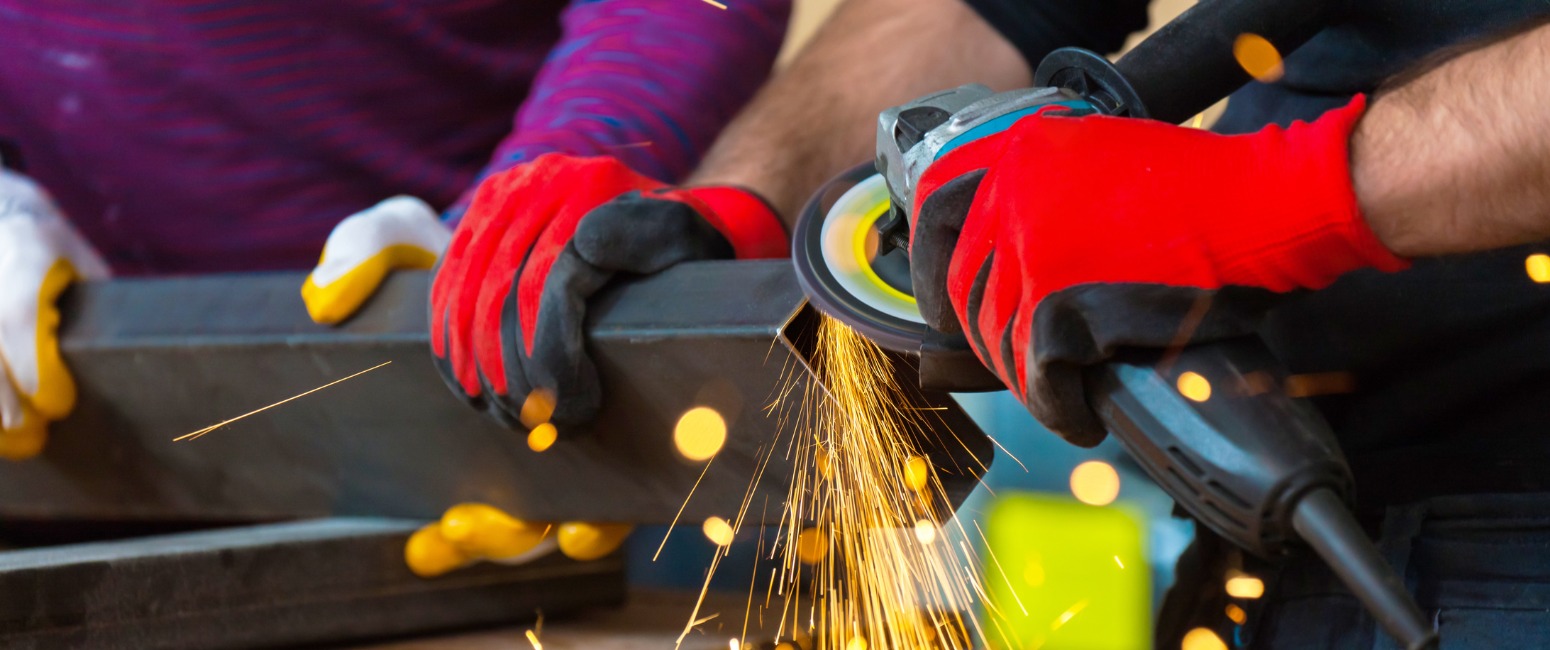
Hand injuries are the second leading cause of work-related injuries. Over 1,000,000 hand injuries are recorded every year.
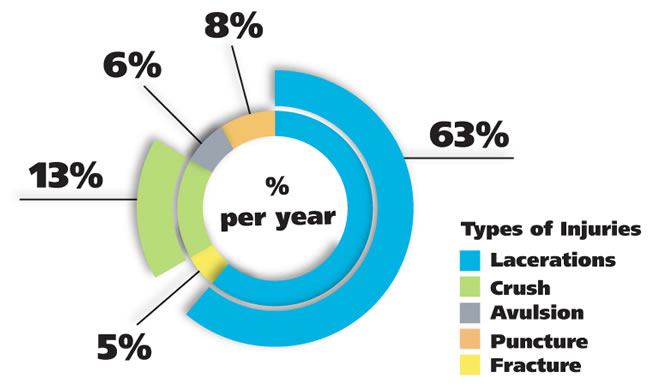
Almost 70% of hand injuries result from lacerations and punctures — both of which can be significantly reduced through proper protection and precautions, specifically by providing gloves (personal protective equipment) to every employee.
Choosing the Right Glove
There are many different manufacturers and types of gloves in the marketplace that help reduce hand injuries. Whether working in the automotive or food and beverage industry, handling glass, or fabricating metal, gloves are designed to meet certain attributes.
Most desired traits today include:
- Safe
- Strong
- Comfortable
- Lightweight
- Durable
Other common requests include:
- UV resistant
- Anti-wick
- Anti-static
- Conductive
There are even requests for gloves that are more fashionable. As an employer, the options for PPE are endless — so how do you know which to choose, and why?
1. Built from customised yarns and coatings
Gloves can be constructed using a customised blend of yarns and coatings to meet specific requirements. For instance, a yarn with flame resistant properties, like a meta- or para-aramid, would be used when heat is a concern. Alternatively, applications requiring gloves with cut level 4–5 ratings can be designed using hybrid yarns with fibreglass or stainless steel in the core.
2. Chosen with cost in mind
The customised blend of yarns and coatings used to develop a glove may also be chosen with cost in mind. Different fibre types can be included in the final yarn blend to provide high quality and the required attributes while reducing cost. New innovative materials, formulations, and in-house yarns are not only impacting overall costs but are also exceeding previous performance standards.
3. Chosen with the wearer in mind
Gloves need to be chosen with the wearer in mind. To make a positive impact, it’s important that gloves provide the required level of safety while remaining comfortable, and in some cases lightweight or fashionable. Whether matching ‘weekend gear’ or providing breathability, gloves are more likely to be worn consistently when the wearer sees them as useful or appealing.
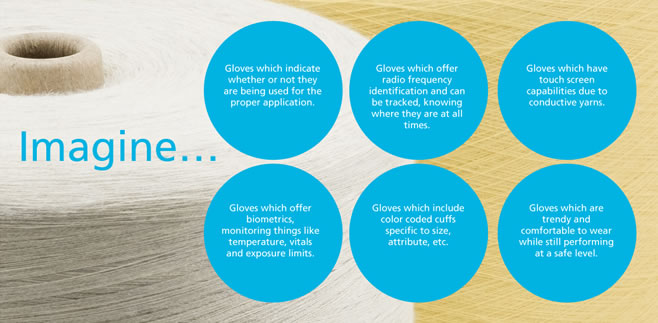
Imagine… The Future of Gloves
The future of gloves, and PPE more broadly, is even more specialised and high-tech.
What Coats Offers
Coats offers an advanced portfolio of flame-resistant, arc and cut resistant yarns solutions for the weaving and knitting of gloves. Our yarns can be engineered through customized fibre blends to meet specific application requirements. Developed in close partnership with our customers, these solutions combine performance, versatility and protection for demanding hand safety applications.
The single easiest way to reduce hand injuries is to provide protection. Ask us how we can help you!